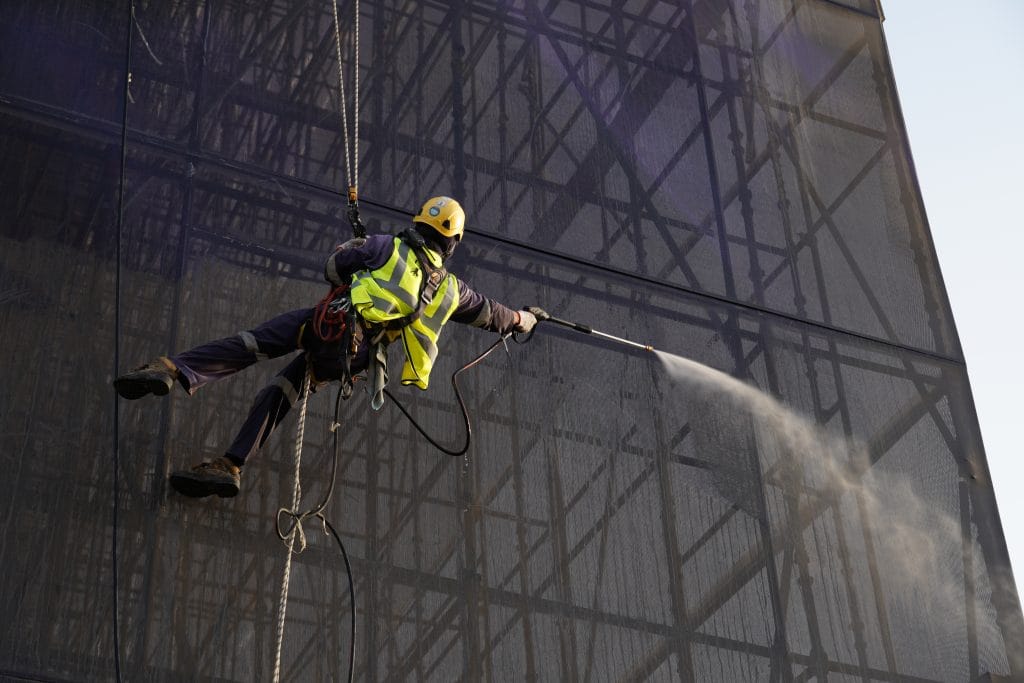
High altitude work demands physical strength and mental focus to finish tasks safely. These experts move across structures using ropes to reach spots that machines cannot touch. They follow strict safety rules while hanging hundreds of feet in the air.
Every movement is planned to keep workers safe during long shifts. This work is common for rope access cleaning services in Dubai where tall towers need care.
Double rope systems:
Safety is the main goal for every technician. They use two separate ropes at all times. One rope allows them to move up or down while the second rope acts as a safety backup. If the first rope has a problem, the second one stops a fall instantly. This simple rule keeps workers safe even on the tallest skyscrapers.
Rigorous training sessions:
No one starts this job without learning the right skills. Technicians spend many hours practicing rescue moves and knots. They must pass tests to show they can handle emergency situations. Training teaches them to stay calm when they are far above the street. Learning these skills is the first step toward a career in the sky.
Specialized gear checks:
Before every shift, workers look at their equipment very carefully. They check harnesses, carabiners, and ropes for any signs of wear. Even a small scratch on a metal clip means the tool gets replaced. Using high-quality gear is a basic part of the job. This daily habit ensures that every piece of equipment works perfectly every time.
Anchor point security:
Technicians attach their ropes to strong parts of the building called anchor points. These points are tested to hold a lot of weight. They ensure the ropes do not rub against sharp edges by using protectors. A solid anchor is the foundation for all work done at height. Without a strong connection to the building, the work cannot happen.
Weather monitoring:
Wind and rain change how safe it is to work outside. Technicians watch the sky and use tools to measure wind speed. If the wind gets too strong, they stop working and return to a safe area. Working in bad weather is risky, so they wait for clear skies. Respecting nature is a key part of staying safe on the job.